Court Marriage in Delhi NCR
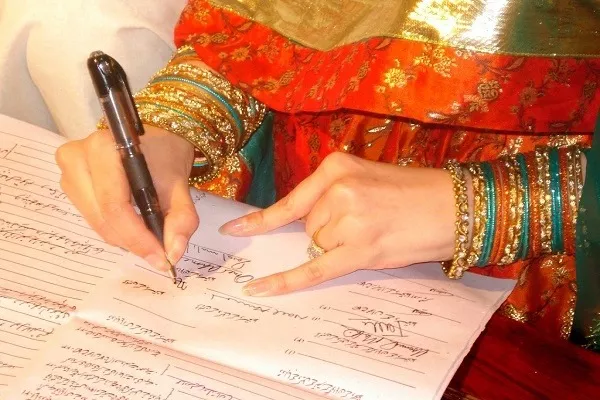
Court marriage is one of the most searched marriage options in Delhi NCR, especially among couples who want a simple legal marriage without a large traditional wedding.
However, the term “court marriage” can be confusing.
A court marriage does not normally mean that a couple simply walks into a courtroom and gets married before a judge. In the common civil-marriage route, the marriage is solemnized before a Marriage Officer under the Special Marriage Act, 1954, after the couple follows the statutory notice and other legal requirements.
For couples in Delhi, Noida, Greater Noida, Ghaziabad, Gurugram and Faridabad, understanding the correct process is important because different cities fall under different administrative jurisdictions.
MarriageNCR explains the court marriage process in straightforward language so couples can understand eligibility, documents, notice requirements, witnesses, registration and the differences between court marriage and other marriage options.
What Is Court Marriage?
In everyday language, court marriage usually refers to a civil marriage conducted under the Special Marriage Act, 1954.
The Special Marriage Act provides a legal framework for solemnizing marriages without requiring the couple to conduct a religious wedding ceremony.
The marriage is handled through the Marriage Officer appointed under the Act.
This makes the process different from a traditional Hindu, Sikh, Christian or Muslim marriage ceremony.
For example:
- An Arya Samaj marriage involves a Vedic Hindu ceremony.
- An Anand Karaj follows Sikh religious traditions.
- A Christian marriage generally follows the applicable church and legal requirements.
- A Nikah follows Muslim religious traditions.
- A Special Marriage Act marriage follows a civil statutory procedure.
Therefore, couples should first decide what type of marriage they actually want.
Court Marriage Under the Special Marriage Act
The Special Marriage Act, 1954 provides the statutory framework for civil marriages.
Section 4 sets out conditions for a marriage under the Act. These include requirements relating to the existing marital status of the parties, age, mental capacity and prohibited relationships.
The Act does not require the couple to belong to the same religion.
That is one reason the Special Marriage Act is particularly relevant to many interfaith couples.
Delhi’s official marriage-registration guidance separately identifies the Special Marriage Act for marriages between persons of different religions and specifies its own eligibility and residence requirements.
Who Can Have a Court Marriage?
The exact legal requirements depend on the applicable law and circumstances.
For a Special Marriage Act marriage, the statutory conditions include important requirements concerning:
- Age
- Existing spouse
- Mental capacity and valid consent
- Prohibited relationships
- Residence and jurisdiction
- Required notice
- Marriage Officer procedure
Section 4 of the Special Marriage Act sets out the core conditions.
For Delhi’s registration guidance, the government currently states that the groom should be 21 years old and the bride 18 years old on the marriage date for the relevant registration routes.
Couples should verify the current requirements before beginning the process.
Is Court Marriage Different From Marriage Registration?
Yes.
This distinction is extremely important.
Court marriage
A couple intending to marry under the Special Marriage Act follows the statutory process and solemnizes the marriage before the Marriage Officer.
Marriage registration
Registration generally refers to recording a marriage that has already been solemnized under an applicable marriage law.
Delhi’s district administration explicitly states that a marriage which has already been solemnized can be registered under the Hindu Marriage Act, 1955 or the Special Marriage Act, 1954, depending on the circumstances.
Therefore, a couple should not automatically use the words “court marriage” and “marriage registration” interchangeably.
Court Marriage vs Traditional Marriage
The biggest difference is the nature of the ceremony.
A traditional marriage usually includes religious customs and rituals.
A Special Marriage Act marriage follows a statutory civil procedure.
This can make court marriage attractive to couples who want a legally recognized marriage without arranging a large religious ceremony.
However, the legal process still requires preparation.
The couple must satisfy the statutory conditions, complete the notice process, provide the required information and documents, appear before the Marriage Officer and complete the solemnization formalities.
Court Marriage for Interfaith Couples
The Special Marriage Act is particularly relevant when two people from different religions want to marry without requiring either person to change religion.
Delhi’s official guidance identifies registration under the Special Marriage Act where the marriage is between two persons of different religions. It also lists residence, age and witness requirements.
The Act itself provides the civil framework rather than requiring a religious marriage ceremony.
Therefore, an interfaith couple should understand the Special Marriage Act before choosing a religious ceremony or a different registration route.
Court Marriage for Inter-Caste Couples
Inter-caste and interfaith marriages are different.
If two people belong to different caste communities but follow the same religion, caste difference alone does not automatically require a Special Marriage Act marriage.
For example, two eligible Hindus from different caste backgrounds may be able to marry under the Hindu Marriage Act and register the marriage through the applicable procedure.
Delhi’s official guidance provides a Hindu Marriage Act registration route for marriages between Hindus, Buddhists, Jains or Sikhs where the stated conditions are satisfied.
The Special Marriage Act can also provide a civil route where its conditions are satisfied.
Therefore, choose the legal route based on the couple’s circumstances rather than simply searching for “inter-caste court marriage.”
The Court Marriage Notice Period
The notice procedure is one of the most important parts of a Special Marriage Act marriage.
Under Section 5 of the Special Marriage Act, the parties must give written notice of their intended marriage to the Marriage Officer of the district where at least one of them has resided for at least 30 days immediately before giving the notice.
The process does not end when the notice is submitted.
Publication of notice
Section 6 provides for the Marriage Officer to enter the notice in the Marriage Notice Book and publish it by displaying a copy at the relevant office. In certain circumstances, a copy can also be sent to the Marriage Officer of another district where one party permanently resides.
Objection period
Section 7 provides a statutory period during which a person may object to the intended marriage on the grounds specified in Section 4.
After the 30-day period has expired, the marriage can be solemnized if no valid objection prevents it.
This is why advertisements promising every “court marriage” on the same day can be misleading.
A Special Marriage Act marriage follows its statutory procedure.
Does Every Court Marriage Take 30 Days?
Not necessarily.
This is where couples need to distinguish between different services.
If you are planning to solemnize a new marriage under the Special Marriage Act, the Act contains the notice and publication procedure described above.
A different situation arises when a couple has already solemnized a marriage under another applicable law and wants to register that existing marriage.
Delhi government guidance separately provides for registration of marriages already solemnized under the applicable marriage laws.
Therefore, do not assume that every marriage-registration application follows exactly the same procedure as a new Special Marriage Act marriage.
Court Marriage in Delhi
Delhi has a defined marriage-registration system operated through the concerned district authorities.
Delhi’s official guidance states that, for a Special Marriage Act registration route, the marriage must have been solemnized within the territorial jurisdiction of NCT Delhi, one party must be an Indian citizen and the applicable age and other legal conditions must be satisfied.
For that route, Delhi also states that the parties must have resided within the concerned district for at least 30 days immediately before the application and must appear personally with three witnesses having the required Delhi permanent-residence proof.
These requirements are different from the two-witness requirement shown by Delhi for its compulsory-registration route.
That is why couples should identify the correct legal route before preparing their paperwork.
Court Marriage Documents in Delhi
The exact document checklist can depend on the route and circumstances.
Delhi government guidance identifies documents such as:
For the bride and groom
- Identity proof
- Residence proof
- Date-of-birth proof
- Passport-size photographs
- Affidavits in the prescribed format
- Marriage-related documents where applicable
- Other documents required by the concerned authority
For witnesses
Witnesses may need:
- Identity proof
- Residence proof
- Photographs or other prescribed documents
- Documents demonstrating the required residence status
Delhi’s official guidance specifies witness documentation for its different marriage-registration routes.
Additional documents
Special circumstances can require additional documentation.
For example:
- Divorce decree or order
- Death certificate of a previous spouse
- Embassy certificate for a foreign national
- Religious conversion documentation where applicable
- Other documents requested by the authority
The safest approach is to check the latest official checklist before submitting the application.
Court Marriage Process in Delhi
A Special Marriage Act marriage can be understood through the following stages.
Step 1: Check eligibility
First, determine whether both parties satisfy the conditions under the Special Marriage Act.
Pay particular attention to age, existing marital status, prohibited relationships and residence.
Step 2: Determine the correct Marriage Officer
Identify the Marriage Officer for the district where the statutory residence requirement is satisfied.
Step 3: Prepare the documents
Collect identity, address, age and other required documents.
Make sure the information matches across documents.
Step 4: Give notice of intended marriage
Submit the prescribed notice to the Marriage Officer.
Section 5 requires at least one party to have resided in the relevant district for at least 30 days immediately before giving the notice.
Step 5: Publication and objection period
The Marriage Officer publishes the notice according to the Act.
The statutory objection period then applies.
Step 6: Address any valid objection
If someone files an objection, the Marriage Officer follows the procedure prescribed under the Act.
Section 8 provides for an inquiry into an objection and places a statutory limit on the time for that inquiry.
Step 7: Marriage solemnization
Once the statutory requirements are satisfied, the marriage can be solemnized before the Marriage Officer.
Step 8: Witnesses attend
The parties and required witnesses attend the solemnization appointment and complete the prescribed formalities.
Step 9: Marriage certificate
After completion of the process, the marriage is recorded and the applicable marriage certificate is issued.
How Many Witnesses Are Needed for Court Marriage?
This depends on the legal route.
For a marriage solemnized under the Special Marriage Act, the parties need witnesses as prescribed by the Act and the applicable procedure.
Delhi’s official guidance for the Special Marriage Act registration route currently specifies three witnesses with the required Delhi permanent-residence proof.
This differs from the two witnesses specified by Delhi for its compulsory-registration route.
Therefore, do not rely on a generic “two witnesses required” or “three witnesses required” statement without first identifying the applicable procedure.
Can Parents or Family Stop a Court Marriage?
Family disagreement and the legal requirements for marriage are separate issues.
The Marriage Officer considers the statutory conditions prescribed by law.
Under the Special Marriage Act, objections are dealt with according to the grounds specified in Section 4 and the procedure in Sections 7 and 8.
A person cannot simply invalidate a proposed marriage because they dislike the couple’s choice.
However, if a couple faces a genuine legal dispute, threat, coercion or another serious problem, they should obtain advice from a qualified legal professional or appropriate authority.
MarriageNCR should not present itself as a substitute for individualized legal advice.
Court Marriage in Noida and Greater Noida
Noida and Greater Noida fall under Uttar Pradesh.
Therefore, couples planning a court marriage there should not automatically use Delhi’s Marriage Officer procedure.
The applicable authority and process depend on the relevant Uttar Pradesh jurisdiction.
If one partner lives in Delhi and the other lives in Noida, determine where the statutory residence requirement is satisfied before submitting a notice.
This can save time and prevent applications from being filed with the wrong authority.
Court Marriage in Ghaziabad
Ghaziabad is also in Uttar Pradesh.
Couples planning a court marriage in Ghaziabad should verify the current Uttar Pradesh procedure and the relevant Marriage Officer.
Do not assume that being part of the wider Delhi NCR region means that Delhi’s rules apply.
Court Marriage in Gurugram
Gurugram falls within Haryana.
Therefore, couples planning a court marriage in Gurugram should check the applicable Haryana procedure.
If one partner lives in Delhi and the other lives in Gurugram, determine the correct jurisdiction before preparing the notice.
Court Marriage in Faridabad
Faridabad is also in Haryana.
Couples should verify the applicable Haryana Marriage Officer and current procedure before submitting their documents.
Court Marriage With a Foreign National
A foreign-national marriage can involve additional documentation and legal considerations.
Delhi’s marriage-registration guidance states that an embassy certificate concerning the foreign national’s present marital status and nationality may be required in relevant cases.
Immigration and visa issues can also require separate attention.
Therefore, couples involving a foreign national should check the requirements before fixing the marriage date.
Court Marriage After Divorce
A previous marriage does not automatically prevent a person from marrying again.
However, the previous marriage must have legally ended where applicable.
Delhi’s official marriage-registration guidance identifies a divorce decree or order as an additional document where a party is divorced.
If a previous marriage ended through a complicated proceeding, make sure the legal status is clear before submitting the application.
Court Marriage for Widows or Widowers
A person whose spouse has died may be able to marry again, subject to the applicable legal requirements.
The death certificate of the previous spouse may be required as supporting documentation.
Delhi’s official guidance specifically identifies the death certificate of a previous spouse for relevant registration cases.
Court Marriage and Same-Religion Couples
A common misconception is that the Special Marriage Act is only for interfaith couples.
The Act provides a civil marriage framework subject to its statutory conditions.
However, Delhi’s separate registration guidance also provides Hindu Marriage Act registration for marriages between Hindus, Buddhists, Jains or Sikhs where the requirements are satisfied.
Therefore, a same-religion couple should compare the available legal routes before deciding which process suits their circumstances.
Court Marriage vs Arya Samaj Marriage
These are different processes.
Arya Samaj marriage
A religious Hindu marriage ceremony performed according to Arya Samaj traditions.
Court marriage
A civil marriage process under the Special Marriage Act.
An Arya Samaj couple may subsequently register the marriage under the applicable marriage-registration law.
A couple choosing the Special Marriage Act follows the statutory notice and solemnization procedure.
Therefore, choose the process based on what you actually want rather than the marketing terminology used by a service provider.
Common Court Marriage Mistakes
Mistake 1: Believing court marriage happens before a judge
The Special Marriage Act process involves the Marriage Officer. It is not simply a wedding ceremony before a court judge.
Mistake 2: Expecting every court marriage to happen immediately
A new Special Marriage Act marriage involves the statutory notice and objection process.
Mistake 3: Using the wrong district
The residence requirement matters.
Mistake 4: Bringing the wrong number of witnesses
Witness requirements differ according to the applicable procedure.
Mistake 5: Submitting inconsistent documents
Names, dates of birth and addresses should be checked carefully.
Mistake 6: Confusing registration with solemnization
A marriage already performed and a new civil marriage under the Special Marriage Act can involve different procedures.
Mistake 7: Believing every website’s “same-day” claim
A private website cannot remove statutory requirements imposed by law.
Why MarriageNCR for Court Marriage?
Court marriage becomes much easier to understand when the terminology is clear.
MarriageNCR helps couples understand:
- Special Marriage Act
- Court marriage
- Marriage registration
- Marriage Officer
- Notice of intended marriage
- Notice period
- Objection process
- Required documents
- Witness requirements
- Delhi jurisdiction
- Noida and Greater Noida marriage information
- Ghaziabad marriage information
- Gurugram marriage information
- Faridabad marriage information
- Interfaith marriage
- Inter-caste marriage
- Marriage involving foreign nationals
Our aim is to provide practical information without promising outcomes that only a government authority can determine.
MarriageNCR is an independent information and assistance platform. It is not a court, government department or government-authorized marriage office.
Frequently Asked Questions
What is court marriage?
Court marriage commonly refers to a civil marriage solemnized under the Special Marriage Act, 1954 before the Marriage Officer after following the statutory procedure.
Does court marriage happen inside a court?
Not necessarily. The Special Marriage Act provides for solemnization before a Marriage Officer. The common term “court marriage” does not mean that a judge conducts the wedding.
Is court marriage possible between people of different religions?
Yes. The Special Marriage Act provides a civil framework that can apply to interfaith couples, subject to its statutory conditions. Delhi’s official guidance separately identifies this route for marriages between persons of different religions.
Is there a 30-day notice period?
For a marriage intended to be solemnized under the Special Marriage Act, Section 5 requires notice and at least one party must have resided in the relevant district for at least 30 days immediately before giving the notice. The Act then provides for publication and a 30-day objection period.
How many witnesses are needed?
The applicable number depends on the procedure. Delhi’s current guidance specifies three witnesses for its Special Marriage Act registration route.
What documents are needed for court marriage?
Documents can vary according to the circumstances, but identity proof, residence proof, age proof, photographs, affidavits and witness documents are commonly relevant. Additional documents can apply for divorced persons, widows or widowers and foreign nationals.
Can an inter-caste couple have a court marriage?
Yes, where the couple satisfies the conditions of the Special Marriage Act. However, an inter-caste couple does not automatically need this route simply because the partners belong to different castes.
Can two Hindus choose court marriage?
The Special Marriage Act provides a civil marriage route subject to its conditions. However, eligible Hindu couples may also have a Hindu marriage and use the applicable Hindu Marriage Act registration route.
Can a divorced person have a court marriage?
A divorced person can marry again after satisfying the applicable legal requirements, and the relevant divorce decree or order may be required as supporting documentation.
Can a foreign national have a court marriage in Delhi?
A marriage involving a foreign national can be possible, but additional documentation may apply. Delhi’s guidance identifies an embassy certificate concerning the foreign national’s present marital status and nationality in relevant cases.
Does MarriageNCR guarantee court marriage?
No. MarriageNCR can provide information and assistance, but the Marriage Officer or other competent authority makes the final decision under the applicable law.
Plan Your Court Marriage With Clear Information
Court marriage does not need to be mysterious.
First, decide whether you want a civil marriage under the Special Marriage Act or a traditional marriage followed by registration. Then check the applicable jurisdiction, residence requirement, documents, witnesses and statutory notice procedure.
If you are planning a court marriage in Delhi, Noida, Greater Noida, Ghaziabad, Gurugram, Faridabad or another Delhi NCR location, understand the applicable process before submitting your application.
MarriageNCR — Clear marriage information and assistance across Delhi NCR.
Disclaimer: MarriageNCR is an independent information and assistance platform. It is not affiliated with any government department, court, Marriage Officer, police authority or statutory body. Marriage laws, procedures, documents, fees and administrative requirements may change. Always verify the current requirements with the relevant government authority. For individual legal questions, consult a qualified legal professional.