Hindu Marriage in Delhi NCR
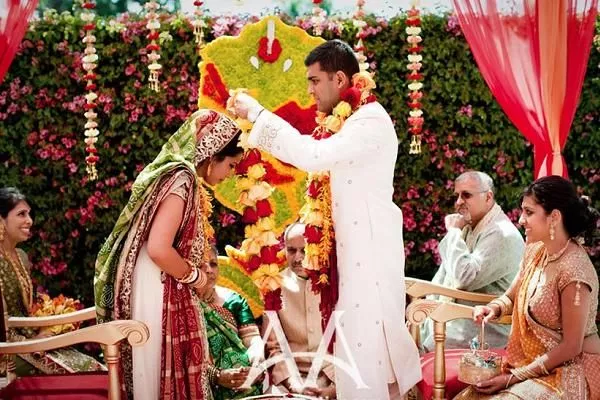
A Hindu marriage is more than a wedding ceremony. It is a traditional union performed according to Hindu customs and, when required, followed by legal registration and documentation.
For couples planning a Hindu marriage in Delhi NCR, the process can sometimes feel confusing. You may have questions about the ceremony, eligibility, documents, witnesses, marriage registration, and the difference between a Hindu marriage and other marriage procedures.
MarriageNCR provides clear information and practical assistance for couples who want to understand the Hindu marriage process in Delhi, Noida, Gurugram, Ghaziabad, Faridabad and other parts of NCR.
Our goal is simple: help you understand the process before you make arrangements.
What Is a Hindu Marriage?
A Hindu marriage is a marriage solemnized between people to whom the Hindu Marriage Act, 1955 applies, subject to the conditions prescribed by law.
The Hindu Marriage Act sets out conditions for a valid Hindu marriage. For example, neither party should have a living spouse at the time of marriage, the parties must meet the applicable legal requirements relating to consent and prohibited relationships, and the minimum legal marriageable age is 21 years for the groom and 18 years for the bride.
The Act also recognizes the importance of customary ceremonies. Section 7 deals with ceremonies for solemnization of a Hindu marriage, while Section 8 deals with registration of Hindu marriages.
Therefore, couples should look at two connected but different parts of the process:
- Solemnization of the Hindu marriage
- Registration and obtaining documentary proof of the marriage
Understanding this distinction makes the entire process easier.
Hindu Marriage Ceremony in Delhi NCR
A traditional Hindu marriage usually follows customs practiced by the families and community of the couple.
Depending on the family’s traditions, the ceremony may include rituals such as:
- Ganesh Puja
- Var Mala
- Kanyadaan
- Havan
- Pheras around the sacred fire
- Mangal Phere
- Sindoor
- Mangalsutra
- Saptapadi
- Blessings from elders
The exact rituals can vary according to regional traditions, family customs and the community.
For this reason, couples should discuss the ceremony with their family and priest before finalizing the arrangements.
A qualified priest can also explain which ceremonies are traditionally performed and how the wedding should be conducted according to the relevant custom.
Who Can Marry Under the Hindu Marriage Act?
The Hindu Marriage Act provides the legal framework for marriages between two Hindus, subject to its conditions. The Act also applies to Buddhists, Jains and Sikhs in the circumstances specified by the law. Delhi’s official marriage-registration guidance similarly states that registration under the Hindu Marriage Act applies to marriages between Hindus, Buddhists, Jains or Sikhs.
However, simply following a Hindu wedding ceremony does not remove the other legal requirements.
The couple must satisfy the applicable conditions under the Act.
Basic legal conditions
Among the important conditions are:
- Neither party should have a spouse living at the time of marriage.
- The parties must meet the applicable requirements concerning mental capacity and valid consent.
- The parties must not fall within prohibited degrees of relationship unless an applicable custom permits the marriage.
- The parties must not be sapindas of each other unless an applicable custom permits the marriage.
- The applicable minimum age must be satisfied.
The official text of the Hindu Marriage Act contains the complete statutory conditions, so couples should rely on the law and applicable government guidance rather than informal online claims.
Hindu Marriage and Marriage Registration
One of the most common questions couples ask is whether a Hindu marriage and marriage registration are the same thing.
They are not the same step.
A couple may first solemnize their marriage according to Hindu customs and then complete the applicable registration process.
Delhi government guidance specifically states that a marriage already solemnized can be registered under the Hindu Marriage Act, 1955 or, where applicable, under the Special Marriage Act, 1954.
Registration provides official documentary evidence of the marriage.
This certificate can become important when dealing with banks, passports, immigration matters, insurance, government records and other situations where proof of marital status may be required.
Hindu Marriage Registration in Delhi
If the marriage falls within the Delhi government’s jurisdiction and satisfies the requirements for registration under the Hindu Marriage Act, the couple must follow the applicable procedure of the concerned authority.
Delhi’s official guidance states that, for registration under the Hindu Marriage Act, one party must be an Indian citizen, the marriage must have been solemnized within the territorial jurisdiction of NCT Delhi, and the marriage must satisfy the conditions specified by the Act.
The same guidance requires the bride and groom to appear personally with witnesses on the appointment date.
The exact authority and procedure can depend on the jurisdiction and circumstances of the marriage. Therefore, couples should verify their applicable district procedure before submitting an application.
Documents Required for Hindu Marriage Registration
Preparing documents in advance can make the registration process considerably easier.
Delhi government guidance lists identity proof, residence proof and date-of-birth proof for both parties. It also lists documents relating to witnesses and additional documents for specific circumstances.
Commonly requested documents may include:
For the bride and groom
- Identity proof
- Address or residence proof
- Date-of-birth proof
- Passport-size photographs
- Marriage photographs or other marriage-related evidence where applicable
- Affidavit in the prescribed format
- Marriage invitation card, if available
For witnesses
- Identity proof
- Required residence proof
- Other documents required by the concerned authority
Additional documents in special situations
If one party was previously married, additional documentation may apply.
For example:
- Divorce decree/order where applicable
- Death certificate of a previous spouse where applicable
- Embassy certificate in certain cases involving a foreign national
- Certificate from the priest or religious institution where the marriage was solemnized, where required
Delhi district guidance also lists documents such as marriage affidavits, residential proof, photographs and a priest’s certificate in relevant cases.
Because document requirements can vary according to the circumstances, couples should check the latest instructions of the concerned Delhi authority before applying.
How the Hindu Marriage Process Works
Although individual circumstances differ, a typical process can be understood in a few stages.
Step 1: Discuss the wedding requirements
First, decide whether you want a traditional Hindu wedding ceremony, a smaller family ceremony or another format consistent with your traditions.
Step 2: Select the priest and venue
Next, finalize the priest and wedding location.
If you are planning a ceremony at home, a temple, banquet hall or another venue, discuss the required rituals with the priest beforehand.
Step 3: Complete the Hindu marriage ceremony
The priest conducts the ceremony according to the applicable customs and rituals.
Keep your marriage-related documents and photographs safely after the ceremony.
Step 4: Prepare the registration documents
After the ceremony, collect the identity, residence, age and other documents required for registration.
Check the requirements of the relevant district authority before submitting anything.
Step 5: Apply for registration
Submit the application through the applicable government process and provide the required documents.
Step 6: Attend the appointment
Delhi’s official guidance requires the bride and groom and the applicable witnesses to appear before the concerned marriage officer for verification.
Step 7: Receive the marriage certificate
After the authority completes the applicable verification and registration process, the marriage certificate can serve as official documentary evidence of the registered marriage.
Hindu Marriage in Noida, Gurugram and Other NCR Cities
Delhi NCR includes several cities with different local administrative authorities.
A couple living in Noida, Greater Noida, Ghaziabad, Gurugram, Faridabad or another NCR location should not automatically assume that the Delhi registration procedure applies to them.
The responsible authority, jurisdiction, application procedure and document requirements can depend on where the marriage took place and where the parties reside.
That is why MarriageNCR organizes information around individual NCR locations instead of presenting one procedure as though it applies identically everywhere.
Hindu Marriage in Delhi
Delhi couples should identify the appropriate district authority and verify the current registration requirements before applying.
Hindu Marriage in Noida
Couples in Noida and Greater Noida should check the applicable Uttar Pradesh authority and jurisdiction rather than using Delhi-specific forms or instructions.
Hindu Marriage in Gurugram
Couples in Gurugram should follow the applicable Haryana procedure and confirm the relevant registration authority.
Hindu Marriage in Ghaziabad
Couples in Ghaziabad should check the applicable Uttar Pradesh jurisdiction and current documentation requirements.
Hindu Marriage in Faridabad
Couples in Faridabad should verify the applicable Haryana registration procedure before submitting an application.
Hindu Marriage vs Court Marriage
People often use the phrase “court marriage” for several different situations.
However, a traditional Hindu marriage ceremony and a marriage solemnized under the Special Marriage Act are different legal routes.
If both parties follow a Hindu marriage ceremony, they may subsequently look at registration under the Hindu Marriage Act where the applicable requirements are satisfied.
The Special Marriage Act provides a different statutory framework.
Therefore, couples should choose the process based on their actual circumstances instead of selecting a process simply because someone calls it a “court marriage.”
Hindu Marriage for Different Communities
Hindu marriage law can apply to Hindus as well as Buddhists, Jains and Sikhs in the circumstances covered by the Hindu Marriage Act.
However, interfaith marriages require particular attention.
Delhi’s official guidance treats marriages between persons of different religions under the Special Marriage Act route rather than treating them automatically as Hindu Marriage Act registrations.
If your situation involves different religions, conversion, a foreign national or another unusual circumstance, check the applicable legal route before planning the ceremony or registration.
Why Couples Choose MarriageNCR
Planning a marriage is personal. The documentation process, however, should remain practical and clear.
MarriageNCR is designed to bring the information together in one place.
You can use our platform to understand:
- Hindu marriage procedures
- Marriage registration
- Required documents
- Witness requirements
- Delhi NCR jurisdictions
- Different marriage options
- Location-specific information
- Common questions before applying
We also encourage couples to verify important legal requirements with the relevant government authority.
MarriageNCR is an independent information and assistance platform. It is not a government department, court or government-authorized website.
Frequently Asked Questions
What is a Hindu marriage?
A Hindu marriage is a marriage solemnized according to applicable Hindu customs and subject to the legal conditions established under the Hindu Marriage Act, 1955.
What is the minimum marriage age?
Under the current legal framework referenced by Delhi’s official marriage-registration guidance, the groom must be 21 years old and the bride must be 18 years old on the date of marriage.
Can a Hindu marriage be registered after the wedding?
Yes. Delhi government guidance provides for registration of an already solemnized marriage under the applicable law, including the Hindu Marriage Act where its requirements are satisfied.
Do both bride and groom need to appear for registration?
Delhi’s official guidance requires both parties to appear personally along with the applicable witnesses for the registration appointment.
Are witnesses required?
Yes, witnesses form part of the registration process described in Delhi’s official guidance. The number and requirements can depend on the applicable registration route.
Can two people from different religions register under the Hindu Marriage Act?
The answer depends on the circumstances and applicable law. Delhi’s official guidance directs marriages between persons of different religions toward the Special Marriage Act route. Couples should verify their specific situation before applying.
Is a marriage certificate important?
A marriage certificate provides official documentary evidence of a registered marriage. Couples may need it for various administrative, financial, travel and legal purposes.
Can I get help understanding the Hindu marriage process in Delhi NCR?
Yes. MarriageNCR can help you understand the available marriage and registration options, documents and location-specific information. For legal interpretation or a dispute, consult a qualified legal professional.
Plan Your Hindu Marriage With Better Information
A Hindu wedding should remain a meaningful family occasion. At the same time, the paperwork should not become an unnecessary source of confusion.
Start by understanding the ceremony, legal conditions, registration route, documents and local jurisdiction. Then prepare your paperwork carefully and verify the latest requirements with the appropriate authority.
If you are planning a Hindu marriage in Delhi, Noida, Gurugram, Ghaziabad, Faridabad or another NCR location, explore the relevant MarriageNCR services and guides before taking the next step.
MarriageNCR — Clear information for marriage services across Delhi NCR.
Disclaimer: MarriageNCR is an independent information and assistance platform. It is not affiliated with or operated by any government department, court or statutory authority. Government procedures, fees, documents and requirements may change. Always verify current requirements with the relevant authority before applying.