Sikh Marriage in Delhi NCR
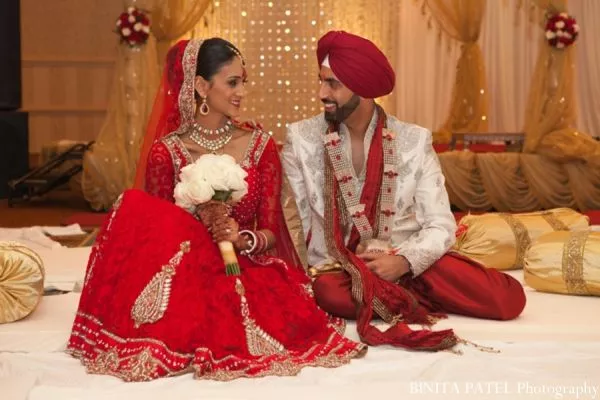
A Sikh marriage, traditionally known as Anand Karaj, is a deeply meaningful ceremony that brings two people and their families together in the presence of the Guru Granth Sahib.
For couples planning a Sikh wedding in Delhi NCR, however, the ceremony is only one part of the journey. You may also need to understand marriage registration, required documents, witnesses, the Anand Karaj ceremony, the Anand Marriage Act and the difference between a religious marriage ceremony and government registration.
That is where good information makes a difference.
MarriageNCR helps couples understand the Sikh marriage process in simple language before they make arrangements. Whether you are planning an Anand Karaj in Delhi, Noida, Greater Noida, Ghaziabad, Gurugram or Faridabad, this guide can help you understand the main steps.
What Is a Sikh Marriage?
A Sikh marriage is commonly known as Anand Karaj.
The Anand Marriage Act, 1909 recognizes marriages duly solemnized according to the Sikh marriage ceremony commonly known as Anand Karaj. The Act applies throughout India and specifically provides a legal framework for recognizing and registering Anand marriages.
Anand Karaj is traditionally conducted according to Sikh religious practice in the presence of the Guru Granth Sahib.
The ceremony has its own religious significance and traditions. Therefore, couples should plan the ceremony with the appropriate Gurdwara authorities and follow the applicable Sikh traditions.
At the same time, couples should separately consider the administrative requirement for marriage registration.
This distinction is important because Anand Karaj and government marriage registration are related but are not simply two names for the same thing.
What Is Anand Karaj?
Anand Karaj is the traditional Sikh marriage ceremony.
The ceremony takes place in a Gurdwara and follows Sikh religious practice. One of its central elements is the recitation of the Laavan, the four hymns associated with the Anand Karaj ceremony.
The couple participates in the ceremony in the presence of the Guru Granth Sahib while the prescribed religious proceedings take place.
Families may also have additional traditions before and after the ceremony.
However, couples should distinguish between religious customs and legal documentation. The religious ceremony establishes the marriage according to the applicable Sikh tradition, while registration provides an official documentary record.
Is Anand Karaj Legally Recognized?
Yes.
The Anand Marriage Act, 1909 was enacted specifically to remove doubts about the validity of the Sikh marriage ceremony known as Anand. Section 2 states that marriages duly solemnized according to the Sikh Anand ceremony are valid in law, subject to the Act and other applicable legal requirements.
The Act also contains provisions dealing with registration.
Section 6 provides for State rules allowing the particulars of an Anand marriage to be entered in a Marriage Register maintained by an authorized government officer or local authority.
Therefore, couples should not treat Anand Karaj as an informal ceremony.
It has a specific legal history and statutory recognition.
Sikh Marriage Registration in Delhi
Delhi has its own compulsory marriage-registration framework.
The Delhi (Compulsory Registration of Marriage) Order, 2014 applies to marriages solemnized in Delhi irrespective of the caste, creed or religion of the parties. The order therefore covers marriages solemnized in Delhi across religious communities, subject to its stated conditions.
Delhi’s current government guidance states that, under the compulsory registration route, one party must be an Indian citizen, the groom must be 21 and the bride 18 on the date of marriage, and the marriage must have been solemnized within the territorial jurisdiction of NCT Delhi.
The Delhi guidance also states that registration under this route should be completed within 60 days, excluding the day on which the final marriage ceremony was solemnized, with provisions concerning penalties for delayed registration.
Therefore, if you are planning an Anand Karaj in Delhi, do not stop with the religious ceremony. Check the applicable marriage-registration procedure as well.
Sikh Marriage Under the Hindu Marriage Act
Delhi’s official marriage-registration guidance also identifies registration under the Hindu Marriage Act, 1955 for marriages between Hindus, Buddhists, Jains or Sikhs where the stated requirements are satisfied.
This means Sikh couples in Delhi may encounter more than one legal reference point when researching marriage registration.
The appropriate route depends on the circumstances and the applicable registration rules.
Because the Anand Marriage Act has its own registration provisions, couples should verify the current procedure with the concerned authority rather than assuming that an online checklist automatically applies to every Sikh marriage.
Who Can Have an Anand Karaj?
The Anand Marriage Act specifically states that it does not apply to a marriage between persons who do not profess the Sikh religion. It also does not validate a marriage that a court has declared null and void.
The Act further states that it does not validate a marriage between persons who fall within prohibited degrees of relationship where the applicable Sikh customary law would make the marriage illegal.
Therefore, couples with unusual circumstances should not rely on a generic wedding-service page to determine their legal eligibility.
If there is a question about religion, previous marriage, prohibited relationships or another legal issue, obtain appropriate professional advice before proceeding.
Minimum Marriage Age
Age is an important legal requirement.
Delhi’s official marriage-registration guidance states that the groom should be 21 years of age and the bride 18 years of age on the date of marriage for the registration routes described by the Delhi government.
Families should confirm the current legal requirements before fixing the wedding arrangements.
MarriageNCR does not recommend relying on informal claims about marriageable age or registration requirements.
The Anand Karaj Ceremony
An Anand Karaj follows Sikh religious traditions.
The ceremony is not simply a civil appointment. It takes place in a religious setting and carries spiritual and cultural significance for the couple and their families.
Depending on the Gurdwara and family’s arrangements, the broader wedding celebration may include several events before and after the Anand Karaj.
However, the central ceremony should be planned according to the guidance of the relevant Gurdwara authorities.
Before the ceremony
Families commonly make arrangements for:
- The Gurdwara
- Wedding date and timing
- Religious ceremony requirements
- Family participation
- Required documentation
- Photography and other practical arrangements
- Post-ceremony documentation
The exact arrangements can vary.
During Anand Karaj
The couple participates in the Sikh marriage ceremony in the presence of the Guru Granth Sahib.
The four Laavan form an important part of the ceremony.
The ceremony should be conducted according to the practices followed by the Gurdwara.
After the ceremony
Keep all marriage-related documents safely.
If registration is required, begin the applicable registration process rather than assuming that the Gurdwara ceremony itself completes every government requirement.
Documents for Sikh Marriage Registration in Delhi
The exact checklist can depend on the applicable registration route.
Delhi government guidance lists identity, residence and age-related documents for marriage registration. It also identifies photographs, ceremonial photographs and certain documents for specific circumstances.
Couples should be prepared to provide documents such as:
Bride and groom
- Identity proof
- Address or residence proof
- Date-of-birth proof
- Passport-size photographs
- Marriage-related documents
- Ceremonial photographs where required
- Other affidavits or forms prescribed by the authority
Witnesses
Depending on the applicable registration process, witnesses may need:
- Identity proof
- Residence proof
- Other prescribed documents
Additional documents
Additional paperwork may apply if:
- One party was previously married
- One party is widowed
- One party is a foreign national
- The marriage involves another legal complication
Delhi’s official guidance specifically refers to a divorce decree or order, death certificate of a previous spouse and an embassy certificate in relevant cases.
Is a Gurdwara Certificate Enough?
Couples should be careful with this question.
A Gurdwara may provide documentation relating to the Anand Karaj. However, the document you receive from a religious institution and a government marriage registration record do not necessarily serve the same administrative purpose.
The Anand Marriage Act itself provides for entry of Anand marriage particulars in a Marriage Register maintained by an authorized government officer or local authority under applicable State rules.
Therefore, ask the relevant authority which registration document applies to your circumstances.
Do not assume that every certificate issued by a religious institution is automatically equivalent to a government registration certificate.
Sikh Marriage Registration Process in Delhi
Although the exact procedure can depend on the applicable route, couples can approach the process in an organized way.
Step 1: Choose the Gurdwara
First, select the Gurdwara where the Anand Karaj will take place.
Ask the Gurdwara about its ceremony requirements well in advance.
Step 2: Prepare the marriage documents
Collect identity, residence and age documents for both parties.
Also keep any documents the Gurdwara requires for the Anand Karaj.
Step 3: Complete the Anand Karaj
The marriage ceremony takes place according to Sikh religious practice.
Keep copies of the relevant marriage records afterward.
Step 4: Identify the correct registration authority
Determine which registration procedure applies to your marriage.
This is particularly important when the couple lives in different NCR cities or when the marriage takes place in a different jurisdiction from the couple’s residence.
Step 5: Submit the application
Complete the prescribed application and provide the required documents.
Step 6: Attend the appointment
Delhi’s official guidance requires the parties to appear personally for the relevant registration process and identifies witness requirements.
Step 7: Complete verification
The concerned authority verifies the submitted documents and information.
If additional information is requested, provide it through the prescribed process.
Step 8: Obtain the applicable registration record
After the registration process is completed, keep the official record securely.
You may need it later for administrative or legal purposes.
Sikh Marriage in Noida and Greater Noida
Noida and Greater Noida are in Uttar Pradesh, so couples should not automatically use Delhi’s registration procedure.
The applicable authority depends on the location and circumstances of the marriage.
If you are planning an Anand Karaj in Noida or Greater Noida, check the current Uttar Pradesh registration procedure before submitting documents.
MarriageNCR can provide location-specific information, but the final requirements should always come from the applicable government authority.
Sikh Marriage in Ghaziabad
Ghaziabad is also in Uttar Pradesh.
Therefore, Sikh couples planning an Anand Karaj there should check the applicable local registration authority and current requirements.
If one partner lives in Delhi and the other lives in Ghaziabad, determine the appropriate jurisdiction before beginning the registration process.
Sikh Marriage in Gurugram
Gurugram falls under Haryana.
Consequently, a Sikh couple marrying in Gurugram should follow the applicable Haryana process rather than assuming that Delhi’s procedure applies.
The same principle applies when the couple lives in one state but plans the Anand Karaj in another.
Sikh Marriage in Faridabad
Faridabad also falls within Haryana.
Couples should therefore verify the applicable Haryana marriage-registration process and local jurisdiction.
This simple step can prevent confusion later.
What If One Partner Is From Another Religion?
This situation requires additional care.
The Anand Marriage Act states that it does not apply to marriages between persons who do not profess the Sikh religion.
Delhi’s official registration guidance also identifies different requirements where one party belongs to a religion other than Hindu, Buddhist, Jain or Sikh.
Therefore, an interfaith couple should determine the appropriate legal route before planning the marriage.
Do not assume that an Anand Karaj automatically provides the same legal route for every interfaith couple.
Sikh Marriage With a Foreign National
A foreign-national partner can introduce additional documentation requirements.
Delhi’s official guidance states that, in the case of a foreign national, a certificate from the concerned embassy regarding the person’s present marital status may be required.
Immigration and nationality matters can also involve additional legal considerations.
Therefore, couples in this situation should verify the current requirements before making final arrangements.
Common Mistakes Sikh Couples Should Avoid
Treating the ceremony and registration as the same thing
Anand Karaj is the religious ceremony.
Marriage registration is the administrative process.
Understand both.
Choosing the wrong jurisdiction
Delhi, Uttar Pradesh and Haryana have different administrative systems.
Confirm where the applicable registration should take place.
Waiting until the last moment
Do not leave document collection until after the wedding.
Prepare your paperwork early.
Assuming every certificate has the same legal purpose
Keep your Gurdwara documents, Anand Karaj records and government registration documents organized separately.
Using outdated online information
Marriage procedures and administrative requirements can change.
Always verify current requirements with the relevant authority.
Why Choose MarriageNCR for Sikh Marriage Information?
Planning an Anand Karaj involves both personal and practical decisions.
MarriageNCR helps couples understand the administrative side without making the process unnecessarily complicated.
Our Sikh marriage information can help you explore:
- Anand Karaj
- Sikh marriage registration
- Marriage documents
- Witness requirements
- Delhi marriage registration
- Noida and Greater Noida marriage information
- Ghaziabad marriage information
- Gurugram marriage information
- Faridabad marriage information
- Interfaith marriage considerations
- Marriage documentation
The aim is not to replace the Gurdwara, government authority or legal professional.
Instead, MarriageNCR helps you understand what questions to ask and what documents to prepare.
Frequently Asked Questions
What is a Sikh marriage called?
A traditional Sikh marriage ceremony is called Anand Karaj.
Is Anand Karaj legally recognized in India?
Yes. The Anand Marriage Act, 1909 specifically recognizes marriages duly solemnized according to the Sikh Anand ceremony, subject to the applicable legal conditions.
Is Anand Karaj the same as marriage registration?
No. Anand Karaj is the Sikh marriage ceremony. Registration creates an official record through the applicable government registration system.
Does Delhi require Sikh marriages to be registered?
Delhi’s compulsory registration order applies to marriages solemnized in Delhi irrespective of caste, creed or religion, subject to the conditions of the order.
Can a Sikh marriage be registered under the Hindu Marriage Act?
Delhi’s official guidance provides for registration under the Hindu Marriage Act where the marriage has been solemnized between two Hindus, Buddhists, Jains or Sikhs and the stated conditions are satisfied.
What documents are needed for Sikh marriage registration?
The requirements depend on the applicable registration route. Delhi’s official guidance includes identity, residence and age-related documents, photographs and additional documents in certain circumstances.
Are witnesses required?
Witness requirements depend on the registration route. Delhi’s compulsory registration guidance requires the bride and groom to appear with two witnesses meeting the stated requirements.
Can an Anand Karaj take place between people of different religions?
The Anand Marriage Act states that it does not apply to a marriage between persons who do not profess the Sikh religion. Interfaith couples should therefore determine the appropriate legal and religious route before proceeding.
Can MarriageNCR guarantee marriage registration?
No. MarriageNCR should not promise approval, guaranteed registration or a guaranteed government timeline.
The concerned authority makes the final decision based on the applicable law, documents and verification.
Plan Your Sikh Marriage With Confidence
An Anand Karaj is an important Sikh ceremony, and the legal documentation deserves equal attention.
Start with the religious arrangements. Then organize your identity, residence and age documents, understand the applicable registration route and confirm the correct jurisdiction.
If you are planning a Sikh marriage in Delhi, Noida, Greater Noida, Ghaziabad, Gurugram, Faridabad or another Delhi NCR location, use the relevant MarriageNCR information before beginning the registration process.
MarriageNCR — Clear marriage information and assistance across Delhi NCR.
Disclaimer: MarriageNCR is an independent information and assistance platform. It is not affiliated with any government department, court, Gurdwara, religious authority or statutory body. Marriage laws, registration procedures, documents, fees and administrative requirements may change. Always verify current requirements with the relevant government authority. For individual legal questions, consult a qualified legal professional.